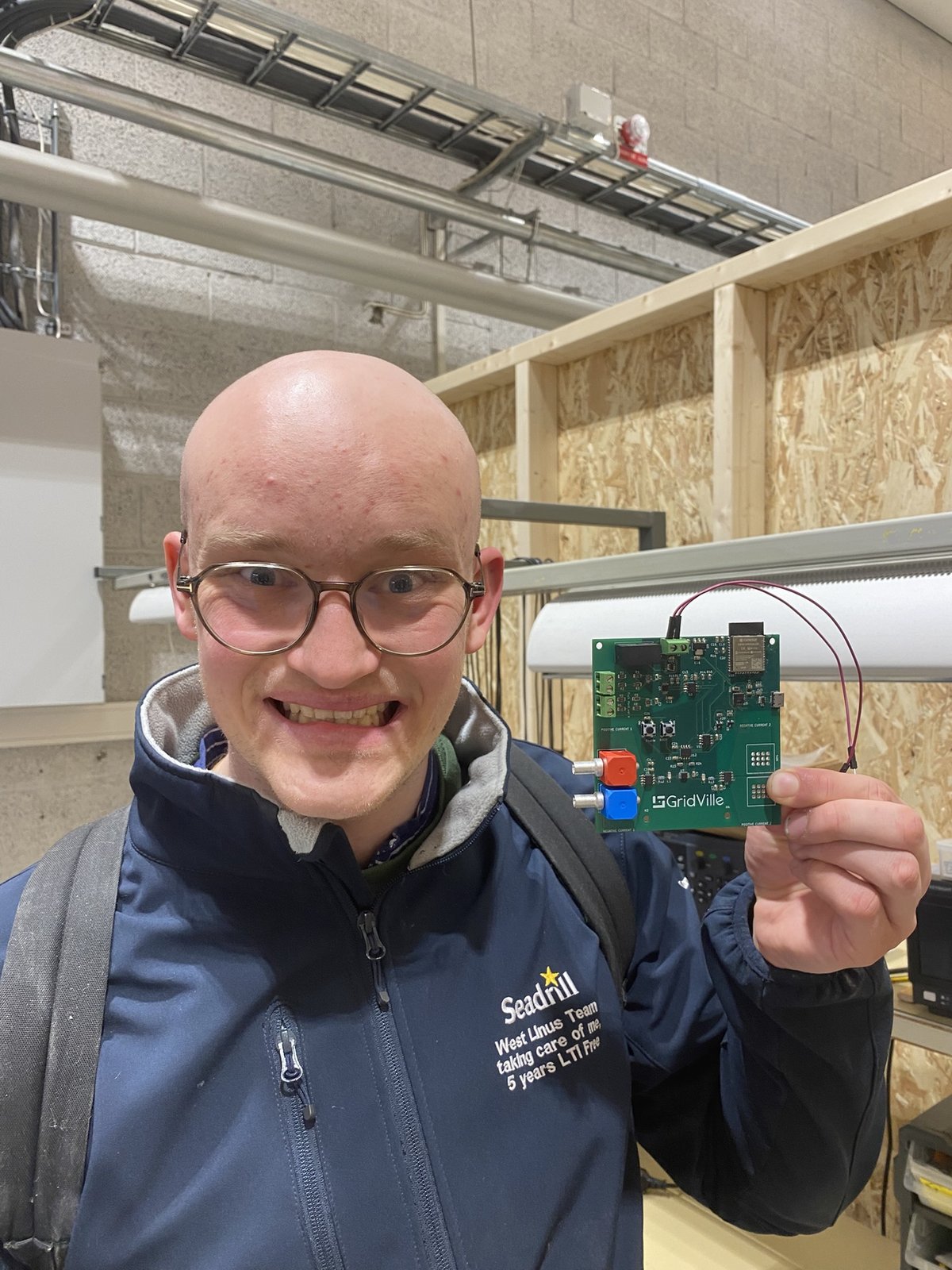
GridVille is a technical student organisation that builds independent microgrids. The long-term idea is grids that can be set up and looked after from far away, in places like Nepal. Our year’s target was much closer: a cabin with solar panels and a 48 V battery bank.
I was on the monitoring team, which built the system that keeps track of that grid:
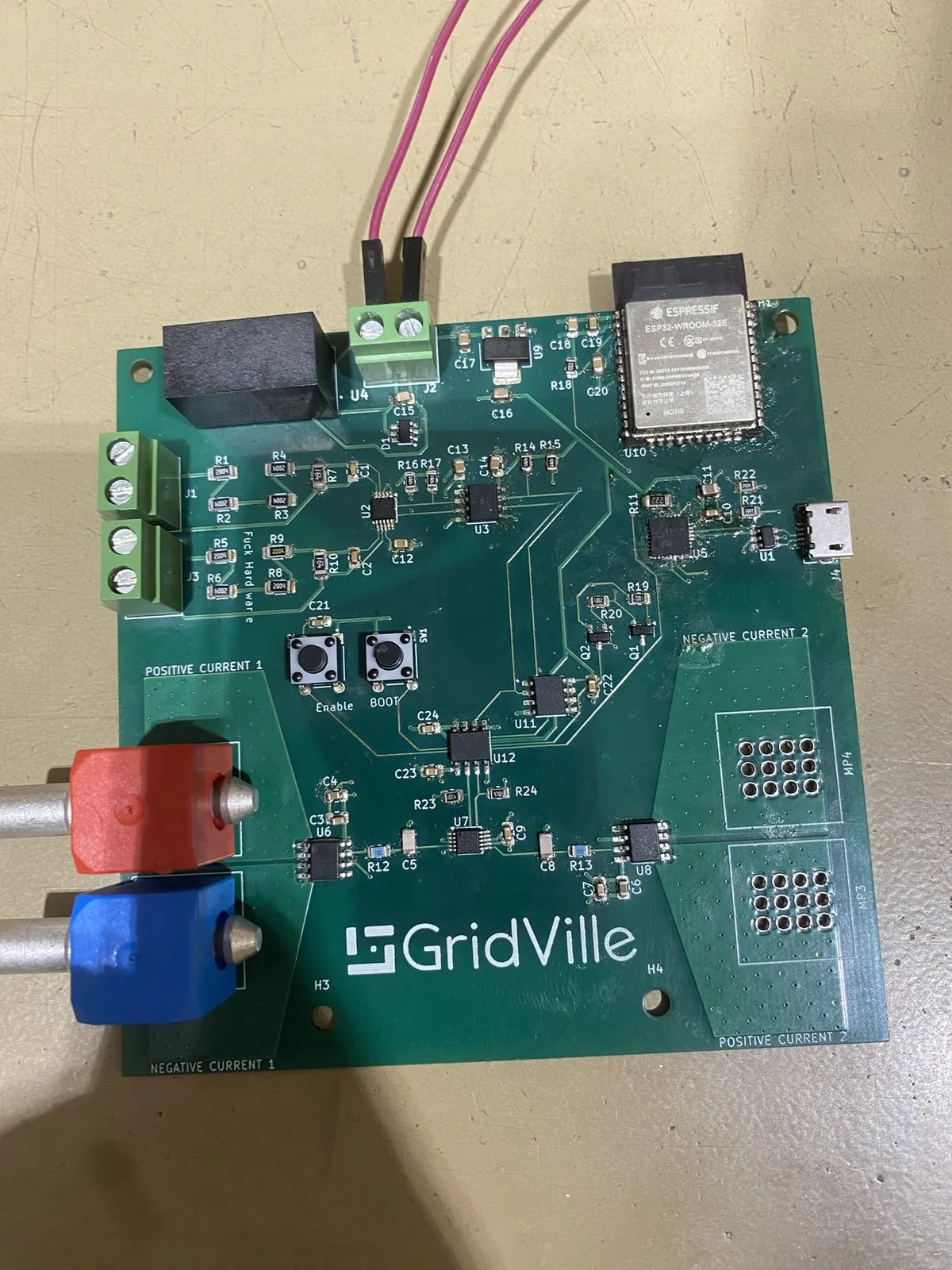
- Sensor boards designed in KiCad that measure voltage and current, including on the solar side.
- ESP32 firmware for each sensor, plus a master node that collects their readings.
- An MQTT broker at the cabin and a server stack in the cloud (Prometheus, TimescaleDB and Grafana, all in Docker), connected over a WireGuard tunnel.
- A state-of-charge estimate that combines coulomb counting with a lookup on the battery’s resting voltage, so the percentage doesn’t drift over time.
- A Raspberry Pi with a screen in the cabin, showing battery level, usage and status as a dashboard.